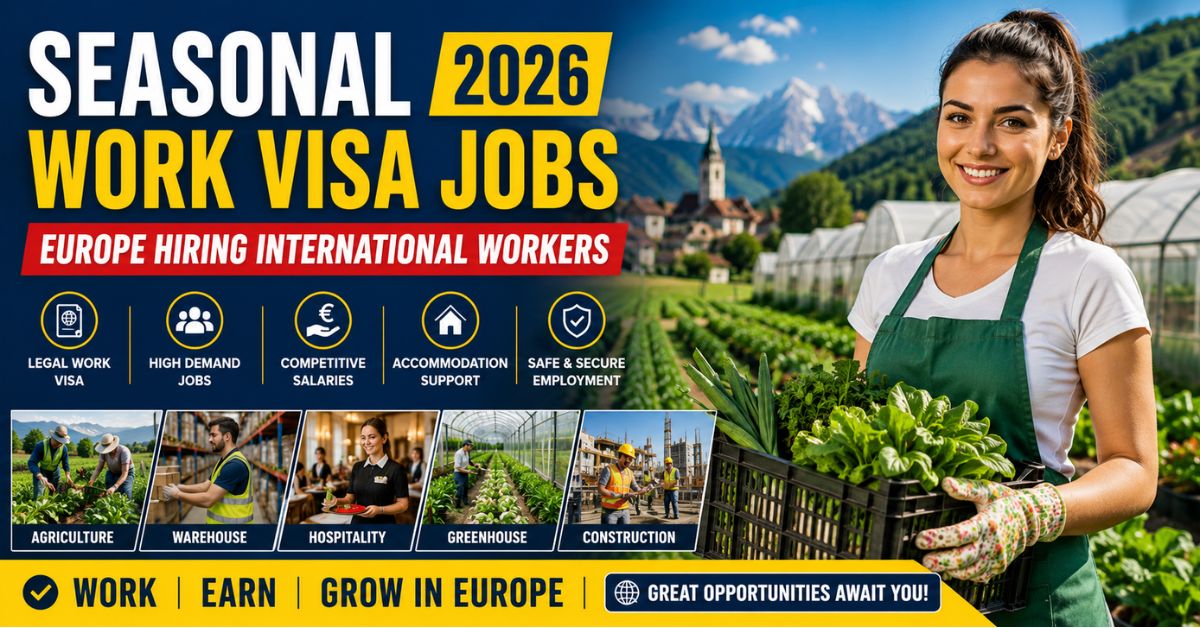
Countries in the Europe cluster will continue to experience labor shortages and this will create thousands of jobs around the seasonal nature of the European job market in 2026, particularly in the agriculture, hospitality, tourism, food processing, warehousing, and construction industries. In Europe, more and more employers are seeking foreign employees to fill temporary and seasonal jobs sustaining the expansion of industries when they are at peak production periods.
On this page
- What is a Seasonal Work Visa Job?
- A Lack of Labor in Europe in 2026
- Labor Shortages in Key Industries
- Growth in Tourism and Hospitality
- Agricultural Harvest Seasons
- E-Commerce and Warehousing Expansion
- Aging Workforce in Europe
- Best European Countries Hiring Seasonal Workers
- Poland Seasonal Work Jobs
- Italy Seasonal Work Visa Jobs
- Spain Seasonal Jobs
- Portugal Seasonal Work Opportunities
- Germany Seasonal Worker Jobs
- Netherlands Seasonal Jobs
- High-Demand Seasonal Work Visa Jobs in Europe
- Food and Farm sectors
Seasonal jobs in Europe through work visas offer job-seekers a chance to acquire overseas work experience, high-paying ordeals and to enjoy a lawful way of living in the various nations of the European Union via the temporary labour prospects. Mainly because of a high demand for labor during some months of the year, foreign workers are regularly employed in certain countries, such as Poland, Italy, Spain, Portugal, Germany, Greece, and Netherlands for various industries.
What is a Seasonal Work Visa Job?
Seasonal Work Visa Jobs are employment schemes that are focused on temporary job to fill shortages of labor in various industries during the time of increased need. Typical sectors for these opportunities include agriculture, tourism, food making, hospitality and logistics.
The reasons are different in Europe, however, where many companies depend on seasonal workers in order to fill in all positions for the busy seasons, due to the fact that local labour is not enough to comply with these shortages. Seasonal work permits are set to allow unskilled foreigners to gain entry into a country on a temporary basis for work in designated industries.
The duration of seasonal work contracts may vary depending on the country and employer. Jobs are shorter-term, some lasting just a few months, some for six months or longer in harvest seasons, or during the tourist summer or when harvest demands forests.
Seasonal work visas are typically job bound that are instantly connected with an employer plus task agreement. The normal practice is for workers to depart the country once their visa or contract is over.
A Lack of Labor in Europe in 2026
There are several important economic and labour dynamics that are driving rising demand for international seasonal workers in Europe.There are valid economic and labour drivers behind the demand for international seasonal workers in Europe.
Labor Shortages in Key Industries
In many countries of Europe, there is still a shortage of employees, notably in physically demanding sectors where it is difficult to recruit domestic workers.
Growth in Tourism and Hospitality
Tourism is thriving in many European countries and is placing demands on professionals working in the hotel, restaurant, cleaning and kitchen as well as resort industries.
Agricultural Harvest Seasons
Temporary workers are needed on farms and agricultural enterprises throughout the fall and spring planting and harvesting seasons, as well as when the fruit is picked and packaged.
E-Commerce and Warehousing Expansion
During the holidays season, when people are shopping, more people are needed for warehouse/deliveries, as there is higher demand.
Aging Workforce in Europe
A lot of European countries suffer from an aging population, and in these countries, this is leading to labour shortages in agriculture, construction and manual jobs.
For this reason, seasonal visas are likely to continue to be significant for 2026.
Best European Countries Hiring Seasonal Workers
Each year, the European countries actively look for seasonal workers from abroad.
Poland Seasonal Work Jobs
For the past number of years, Poland has consistently recruited foreign labor on tap for:
- Agriculture jobs
- Factory work
- Warehouse operations
- Food processing
- Construction support roles
One of the countries considered to be somewhat easier to work in seasonially is Poland with a large demand for industrial jobs.
Italy Seasonal Work Visa Jobs
Italy is often a country where seasonal workers come to work for the following activities:
- Fruit picking
- Vineyard work
- Hospitality jobs
- Tourism services
- Gunner jobs
Seasonal tourism exists and causes a high demand during the summer months.
Spain Seasonal Jobs
Spain is very dependent on temporary workers in both the agricultural and tourism sectors.
Common jobs include:
- Farm harvesting
- Greenhouse work
- Hotel housekeeping
- Restaurant support
- Tourism assistance
Portugal Seasonal Work Opportunities
Foreign workers remain attracted to Portugal for:
- Agriculture jobs
- Seafood processing
- Tourism services
- Resort work
- Packaging operations
Germany Seasonal Worker Jobs
Opportunities to work in Germany during the seasons include:
- Warehousing
- Agriculture
- Logistics
- Food production
- Delivery services
Germany is still driving labour demand with its robust economy and industrial infrastructure.
Netherlands Seasonal Jobs
Seasonal jobs for the Netherlands consist of a variety of jobs that are regularly offered:
- Greenhouse farming
- Flower production
- Logistics centers
- Food packaging
- Agricultural operations
High-Demand Seasonal Work Visa Jobs in Europe
Many people dream of finding a job in Europe in the summer season; this is a good choice of job for international candidates.
Food and Farm sectors
One of the largest seasonal sectors of employment in Europe is agriculture, still.
Common Farm Roles
- Fruit picking
- Vegetable harvesting
- Greenhouse workers
- Vineyard workers
- Farm packaging staff
These positions are frequently physically demanding and outdoor positions.
Hotel and Hospitality Jobs
A rise in tourism leads to growth in the number of workers in hotels, restaurants and resorts.
Popular Hospitality Roles
- Hotel cleaners
- Kitchen assistants
- Waiters and waitresses
- Reception support staff
- Resort maintenance workers
They are very prevalent in hospitality in holiday seasons.
Warehouse and Logistics Jobs
Ecommerce boom has grown temporary warehouses’ demand.
Common Logistics Roles
- Packaging workers
- Inventory assistants
- Sorting staff
- Delivery support workers
- Warehouse helpers
There are seasonal positions throughout the holidays that are wanted at many logistics firms.
Food Processing Jobs
Fruits, vegetables, seafood and packaged food manufacturing companies are common places that employ temporary workers.
Duties May Include
- Sorting food products
- Packaging items
- Operating simple machinery
- Quality inspection
- Cleaning production areas
Construction Support Jobs
Other European countries also involve temporary workers for work on the construction sites during the season.
Examples Include:
- Site cleaning
- Material handling
- Basic labor support
- Warehouse construction assistance
Average Salaries for Seasonal Jobs in Europe
The salaries of seasonal workers fluctuate from country to country, industry to industry, overtime available to take on to the undertakings that the workers are going to be doing. The earnings of agricultural and farm workers are related to the hours spent working and the way they are housed or accommodated.lemagne faced the challenge of a diverse regional population and the scarcity of land.Europe has very varied regions of population and limited land resources.
The wage range for those in the warehouse and logistics sector is around €1,500 to €2,800, particularly in countries with thriving e-commerce markets. The salary of a hotel/hospitality worker can vary according to the level of tourism, from €1300 to €2500 monthly.
Workers involved in construction support and food processing jobs may earn slightly higher wages in countries where there is a shortage of labour. Several employers also offer other fringe benefits, including:
- Free accommodation
- Transportation support
- Overtime payments
- Meals during shifts
- Health insurance assistance
It is always advisable to applicants to carefully examine the employment contracts to ensure the understanding of working conditions, deductions and salary details provided in them before accepting any employment contract.
Seasonal Work Visa Rules
Every nation sets its own rules, yet a few standards show up again and again across summer job permits. While bosses may differ in demands, certain basics tend to repeat worldwide.
Valid Passport
A person going through the process usually has to show a passport that lasts throughout their trip. Duration matters just as much as having one at all.
Job Offer or Employment Contract
A spot on a seasonal visa usually depends on having work lined up with a recognized company. Not every workplace qualifies – only those given the green light by officials. Getting hired there first is what opens the door. Without that connection, the application stalls before it starts. Approval flows from employment, not the other way around.
Work Permit Approval
Often, companies kick off the process by starting work permit paperwork long before visa submissions begin.
Proof of Accommodation
Worker housing details might be needed by certain nations.
Health Insurance
Some workers could require health insurance, based on a country’s visa laws.
Basic Language Skills
Showing up with even a little grasp of English – or the nearby tongue – can tilt odds toward getting hired. Though rules might not demand it, speaking helps when names get called.
Clean Documentation
Faulty details or missing paperwork can slow things down when applying for a visa. Truthful answers matter just as much as correct forms submitted on time.
Folks looking to move might find things shifted since last check – best to confirm what’s now required by checking trusted state websites directly.
How to Get a Job with a Seasonal Work Visa
Working step by step tends to help apps get approved more often.
Research countries and job types
Pick fields and nations fitting what you know, how well you speak languages, where you like working. Though skills matter most, places shape chances too – start there.
Prepare a professional CV
A Simple European Style Resume Should Include
- Work history
- Skills
- Education
- Language abilities
- Certifications
Keep the resume clear and professional.
Find Trusted Places to Look for Jobs
Applicants can search through:
- Employer websites
- International recruitment agencies
- Public sector employment websites
- European employment websites
Check if a business is real first thing when looking at jobs. A quick look into its background helps avoid trouble later on.
Apply for jobs regularly
Applying to several companies at once tends to work better than sitting around hoping for a single reply.
Attend interviews
Employers may ask questions about:
- Previous work experience
- Physical work readiness
- Shift flexibility
- Language communication ability
Complete Visa Process
Once hired, workers may need to:
- Submit visa applications
- Attend embassy appointments
- Provide required documents
- Complete medical or insurance requirements
Seasonal Work Across Europe
Seasonal jobs can provide several valuable advantages for international workers.
International Work Experience
Workers gain practical experience within European industries and workplaces.
Work Overseas
During certain times of the year, temporary work can pay better than regular jobs nearby. Sometimes wages rise when demand spikes in specific areas. Not every region offers steady roles, yet short-term options might bring in more cash. When tourism peaks or harvests begin, earnings often go up too.
Cultural Exposure
Europe gives workdays a new rhythm when lives unfold across borders. Days shift with each country’s pulse, shaping how people move through cities. A morning coffee in one nation feels unlike the next. Workspaces change like weather, unpredictable yet familiar. Each border crossed reshapes routine without announcement.
Skill Development
Teamwork grows stronger when workers practice clear talking. Skills tied to the job get sharper through shared tasks. Better collaboration often follows open conversations.
Potential Career Opportunities
Later on, a few seasonal workers might stay hired past their initial term if companies need them and laws allow it. Employment chances beyond the season depend both on how busy businesses are plus what visas permit. Rules around staying can shift, so permission often hinges on policy at that moment. Workers originally brought in for short roles sometimes continue when openings exist. Whether someone remains employed relies heavily on hiring demands along with government regulations.
What international workers face
Though temporary work opens doors, it helps to see the challenges too.
Physically Demanding Work
Out in the fields or inside big storage buildings, people spend full days on their feet doing heavy work. Sometimes it’s building sites where tasks stretch from sunrise to well past noon. Work keeps going without much rest, just steady movement through one job after another.
Temporary Employment Nature
Most times these roles only last through a single season instead of becoming long-term work.
Language Barriers
Limited local language skills may affect communication in some workplaces.
Cost of Living
Across Europe, where you live affects what you pay for housing. Getting around costs more in some nations than others.
Scam Recruitment Risks
Beware of hiring agents who demand big payments before starting work. Some might offer guarantees that sound too good to be true. Watch out when someone pushes you to pay early. Promises that seem perfect often aren’t. High costs at the beginning are a warning sign. Skip those pushing quick success with heavy charges.
Job Advice for Seasonal Workers
Careful preparation can improve employment success.
Research Employers Thoroughly
Start by checking if the business is real before sending any files or money. A quick look into its status helps avoid trouble later on. Only move forward when details match up clearly. Trust comes after proof shows everything in order.
Improve Communication Skills
Speaking a bit of English – or even just your local tongue – could ease tension during job talks or daily tasks on the floor. Chances are things feel less strained when words flow without pressure weighing down each exchange.
Understand Contract Terms
Start by checking how much you’ll earn each month. Pay attention to when extra hours count toward payment. Housing terms come next – read every line closely. Who handles the work permit? That part matters too.
Stay Organized
Hold on to your contract papers, passport files, along with any visa approval notices. Employer contact details should stay handy too.
Get Ready for Physical Tasks
Folks working holiday jobs often find themselves on their feet a lot. Movement matters more than sitting here. Some tasks require lifting, walking, or standing through shifts. Energy levels need to stay steady most days. Physical stamina plays a role nearly every hour.
Common Mistakes to Avoid
Some people hurt their odds by making mistakes that could have been skipped.
Using Unverified Recruiters to Apply
Avoid suspicious agencies making unrealistic promises.
Ignoring Visa Rules
Beware of rules tied to work permits when taking a job abroad. Staying within the law means checking every detail before starting duties.
Sending Incomplete Applications
A slip of paperwork here, a messy resume there – these can slow things down. When files go missing or layouts confuse, progress hits pause.
Underestimating Work Conditions
Working outside could be part of seasonal roles, often following set shifts. These positions sometimes include doing similar actions over again throughout the day. Routines might change with the time of year, depending on weather or demand.
Failing to Research Employers
Applicants should learn about employers and working conditions before accepting offers.
Europe seasonal work patterns 2026
Several important trends are shaping Europe’s seasonal labor market.
Continued Tourism Growth
Barring sudden shifts, job growth stays steady where travelers flock. Elsewhere, openings rise just slightly during peak seasons. Some resorts hire year round, while others wait for summer crowds. Coastal towns add staff when vacationers arrive. Even smaller lodges prepare early, adjusting schedules ahead of demand.
Increase in Need for Farm Workers
Farm work still pulls people across borders when crops ripen. Harvest time keeps drawing labor from abroad. Seasons change, yet hands from overseas show up again. Crops ready for picking mean jobs fill with foreign workers. Fields call for help that often comes from distant places.
More warehouses for online shopping storage
Faster online buying pushes more short-term storage jobs in Europe. While digital sales climb, companies hire extra hands for brief stints in warehouses. As orders shift from stores to screens, facilities need help during busy windows. With deliveries rising, firms bring on workers just when needed most.
Digital Recruitment Processes
Folks looking to hire now lean on web-based chats instead of face-to-face talks. Computers help sort through applicants faster than before.
Worker Protections First
Folks across Europe keep seeing tighter rules meant to shield workers. New measures pop up regularly, reshaping how bosses treat their teams.
Looking ahead, job spikes tied to seasons might keep growing until 2026. Though temporary by nature, such roles seem likely to hold steady. With patterns pointing upward, short-term hiring could stay active. Not every sector shows it, yet the overall direction leans toward more of these positions. Even if demand shifts elsewhere, seasonal work appears resilient so far.
Also Read: Office And Facilities Coordinator Jobs 2026 Career Guide
FAQs
-
Who brings in temporary workers more than others across Europe?
Farm fields in Poland see foreign hands each harvest. Italian kitchens rely on outside help when summer crowds arrive. Spanish orchards depend on temporary crews picking fruit under hot sun.
-
Do seasonal jobs in Europe require experience?
Some jobs don’t need experience. Training happens while you work, often seen in farming or storage roles.
-
Can foreigners legally work in Europe through seasonal visas?
True, numerous nations provide official temporary job visas for overseas individuals meeting entry conditions.
-
Does the price cover a place to stay along with getting there?
Not every boss offers a place to stay or help getting around – depends on the firm, depends on the deal. Sometimes you get housing, sometimes travel aid, always tied to which employer and what’s written down.
-
Can seasonal jobs lead to permanent work opportunities?
Later on, job options might open up for employees if companies are hiring and rules allow it.
Final Thoughts
Summer fields need extra hands across southern farms each year by 2026. Busy resorts along coastlines start filling roles with travelers willing to stay short term. Delivery hubs outside big cities keep posting shifts due to unmet staffing needs. Restaurants in tourist hotspots turn to outsiders when locals can’t cover hours. Canning plants near harvest zones rely on newcomers during peak months.
Seasonal roles might open doors overseas, bring paychecks, introduce new cultures, plus build real skills. Yet landing one takes clear thinking about what’s possible, following visa rules exactly, checking employers thoroughly before applying, getting your resume ready like a pro.