UK Graduate Visa 2026: The December 31 Deadline That Decides Your Extra 6 Months
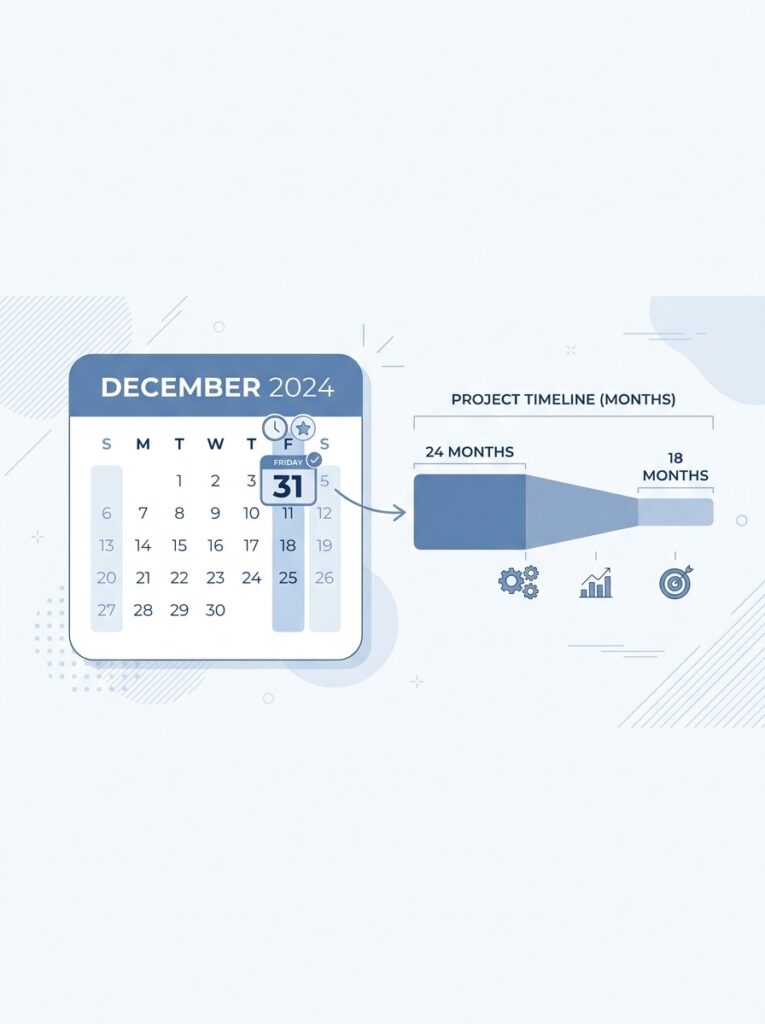
If you are an international student finishing a UK degree, there is one date you cannot afford to get wrong: 31 December 2026. Apply for your Graduate visa on or before that day and you still get the full two years of post-study work permission. Apply from 1 January 2027, and most graduates will get only 18 months — six months less to find a job, switch to a Skilled Worker visa, or build a business.
On this page
- UK Graduate Visa 2026: The December 31 Deadline That Decides Your Extra 6 Months
- The answer in 40 seconds
- What actually changed, and when it was decided
- The timing trap: application date vs graduation date
- Who this change does NOT affect
- Graduate Route basics: eligibility and what it lets you do
- Why the 18-month cut is a bigger deal than it sounds
- A quick word on scams and “agents”
- Key Takeaways
- FAQ
- Related guides
Here is the part almost nobody spells out clearly: the rule keys off the date you submit your application, not the date you graduate and not the date your visa is approved. And because you can only apply after your university confirms your course completion to the Home Office, a slow university reporting process can quietly push a December 2026 graduate into 2027 — costing you six months without you doing anything wrong.
The answer in 40 seconds
The UK Graduate visa (Post-Study Work visa) is being cut from 2 years to 18 months for most graduates. If you submit your application on or before 31 December 2026, you keep the full 2-year stay. Applications submitted on or after 1 January 2027 receive 18 months. PhD and doctoral graduates are not affected — they still get 3 years. Your application submission date is what counts, so timing matters more than most students realise.
What actually changed, and when it was decided
This is enacted policy, not a rumour or a proposal. On 14 October 2025, the Home Office published a Statement of Changes to the Immigration Rules confirming the reduction, and UK Visas and Immigration (UKVI) updated its guidance to match. As several UK immigration law firms including DavidsonMorris have reported, the official Home Office caseworker guidance now states the Graduate route duration is amended to 18 months for applications from 1 January 2027. GOV.UK’s own Graduate visa page has been updated to reflect the same rule.
The change is part of the UK’s wider post-study migration tightening that ran through 2025 and 2026, framed in the Immigration White Paper. The government’s stated reason, repeated in a parliamentary written answer in April 2026, is that graduates should move into graduate-level jobs more quickly rather than spend a long window in lower-skilled work.
Here is the durations breakdown at a glance:
| Your situation | Apply on/before 31 Dec 2026 | Apply on/after 1 Jan 2027 |
|---|---|---|
| Bachelor’s or master’s graduate | 2 years | 18 months |
| PhD / doctoral graduate | 3 years | 3 years (unchanged) |
The timing trap: application date vs graduation date
This is the single most misunderstood point, and it is where students lose six months by accident.
Many international students assume that if they finish their course in 2026, they automatically qualify for the 2-year visa. That is not how it works. The rule looks at the date your valid Graduate visa application is submitted. Finishing your degree in November or December 2026 does not help you if your application only goes in during January 2027.
And there is a catch built into the process: you cannot apply until your university formally confirms to the Home Office that you have successfully completed your course. University reporting is not instant. Results boards, resit windows, dissertation marking and the Christmas break can all delay that confirmation. For students completing between roughly November 2026 and early 2027 — especially January-intake master’s students and some three-year undergraduates — the confirmation can slip into January, which then forces the application into 2027 and locks in the 18-month version.
What to do about it (practical, not legal advice):
- Ask your university’s international student office now how long course-completion reporting to UKVI typically takes after final results.
- Do not wait for your graduation ceremony or your paper certificate — those are irrelevant to the visa. What matters is UKVI receiving the completion confirmation.
- If you are finishing in late 2026, treat every week of December as precious. Chase your department for confirmation the moment results are ratified.
- Have your documents, funds and application ready to submit the same day confirmation lands.
Who this change does NOT affect
Being honest about who can relax matters as much as the warning itself:
- PhD and other doctoral graduates. You are carved out of this change and still receive a 3-year Graduate visa regardless of whether you apply before or after 1 January 2027.
- Anyone who already holds a Graduate visa. The reduction applies to new applications from 2027, not to permission you already have.
- Students who will comfortably finish and apply well before the deadline — for example, most summer 2026 graduates — are on the current 2-year rules with room to spare.
Equally, this route was never for everyone. The Graduate visa is only for people who studied in the UK on a valid Student visa and completed an eligible UK degree, and you can only apply from inside the UK. If you studied abroad, or you have already left the UK, the Graduate route is not your path — you would be looking at sponsored routes such as the Skilled Worker visa instead.
Graduate Route basics: eligibility and what it lets you do
To apply for the Graduate visa you must:
- be in the UK on a valid Student visa (or the older Tier 4 General student visa) at the time you apply;
- have successfully completed an eligible UK bachelor’s, master’s or doctoral course;
- have your education provider confirm that completion to the Home Office; and
- apply before your Student visa expires.
Once granted, the Graduate visa is genuinely flexible while it lasts. You can work full-time or part-time in almost any job, be self-employed, and start a business. It is unsponsored, so you do not need an employer to hold a sponsor licence just to work during this period. The one thing it is not is a route to permanent residence on its own — it is a bridge. The real goal for most graduates is to use the window to switch onto the Skilled Worker visa, which does count toward settlement.
Why the 18-month cut is a bigger deal than it sounds
Six months does not sound like much until you map it against how UK sponsored hiring actually works.
Under the current framework, moving to a Skilled Worker visa is harder than it was two years ago. As UK immigration guidance and multiple 2026 employer guides report, the general Skilled Worker salary threshold rose to £41,700 (or the going rate for your specific occupation code, whichever is higher), the skill level for most sponsored roles moved up to graduate level (RQF Level 6), and the English requirement rose to B2 from 8 January 2026. There is a lower new entrant threshold — commonly cited at £33,400 — that many recent graduates switching from a Student visa can use, which is exactly why the Graduate window is so valuable: it is your runway to find a sponsor and slot into that new-entrant rate.
With only 18 months instead of 24, that runway shrinks. Employers who sponsor typically need lead time to issue a Certificate of Sponsorship and run compliance checks. A shorter Graduate visa compresses your job hunt, your sponsor’s paperwork and your switch application into a tighter box. In competitive sectors, the graduates who plan early — often before they even finish their course — are the ones who convert to Skilled Worker status in time.
Note on proposals vs enacted rules: You may also see reports that the qualifying period for settlement (ILR) could extend from five years toward ten for many routes. Treat anything about a 10-year settlement path as a government plan/proposal unless and until it is confirmed in the Immigration Rules — do not build your timeline around it yet. The 18-month Graduate visa change, by contrast, is confirmed and dated.
A quick word on scams and “agents”
Immigration deadlines are a magnet for bad actors. Applying for the Graduate visa is something you do yourself through the official GOV.UK service — you generally do not need to pay an agent to submit it for you, and no agent can “guarantee” you the 2-year visa or bypass the deadline. Be very wary of anyone who:
- promises to “extend” the December 2026 deadline or get you 2 years after January 2027;
- asks for large fees to file an application you can file yourself; or
- pressures you to pay before your university has even confirmed your course completion.
When in doubt, use your university’s international student advice team — that support is free and comes from people who deal with UKVI every week.
Key Takeaways
- Deadline: Submit your Graduate visa application on or before 31 December 2026 to keep the full 2-year stay. From 1 January 2027, most graduates get 18 months.
- What triggers the rule: your application submission date — not your graduation date, not your visa approval date.
- The trap: you can only apply after your university confirms course completion to UKVI; slow reporting can push late-2026 graduates into 2027. Chase confirmation early.
- PhD graduates are exempt and still receive 3 years.
- Use the window wisely: the Graduate visa is a bridge to a Skilled Worker visa; plan your sponsored-job search early, especially with tighter 2026 salary and skill rules.
- Always confirm on GOV.UK or with your university before acting.
FAQ
1. What is the UK Graduate visa 2026 deadline? Submit your Graduate visa application on or before 31 December 2026 to receive the current 2-year stay. Applications made on or after 1 January 2027 are granted 18 months for most (non-doctoral) graduates.
2. Does my graduation date decide whether I get 2 years or 18 months? No. The duration is decided by the date you submit a valid application, not when you graduate or when the visa is approved. You can only apply after your university confirms your course completion to the Home Office, so timing that confirmation matters.
3. Are PhD graduates affected by the 18-month change? No. PhD and other doctoral graduates continue to receive a 3-year Graduate visa, whether they apply before or after 1 January 2027.